
 EN
What Buyers Usually Misread About Antibacterial Bamboo Fiber Fabric
I have sat in enough sourcing meetings to know the first question a buyer asks about bamboo fiber fabric: does the antibacterial effect actually survive washing? The honest answer is that bamboo fiber fabric is not a permanent antimicrobial shield, and anyone who sells it that way is setting the buyer up for disappointment. The natural antibacterial activity in bamboo fiber fabric comes from compounds present in the bamboo plant itself, often grouped under the name bamboo kun, and these compounds can interfere with bacterial cell function rather than sitting on the surface as a chemical finish that rinses away. That means bamboo fiber fabric can help manage odour and bacterial buildup between washes, which matters for underwear and sleepwear worn close to the skin. It does not replace regular washing. Responsible suppliers support the claim with test methods such as AATCC 100 or ISO 20743 rather than vague assertions, and Eastotec can provide test reports alongside the fabric so buyers have something concrete to audit. For a brand building a product line around bamboo fiber fabric, that distinction between freshness support and hygiene replacement is the difference between a credible claim and a returns problem.
How Breathability in Bamboo Fiber Fabric Shows Up in Daily Wear
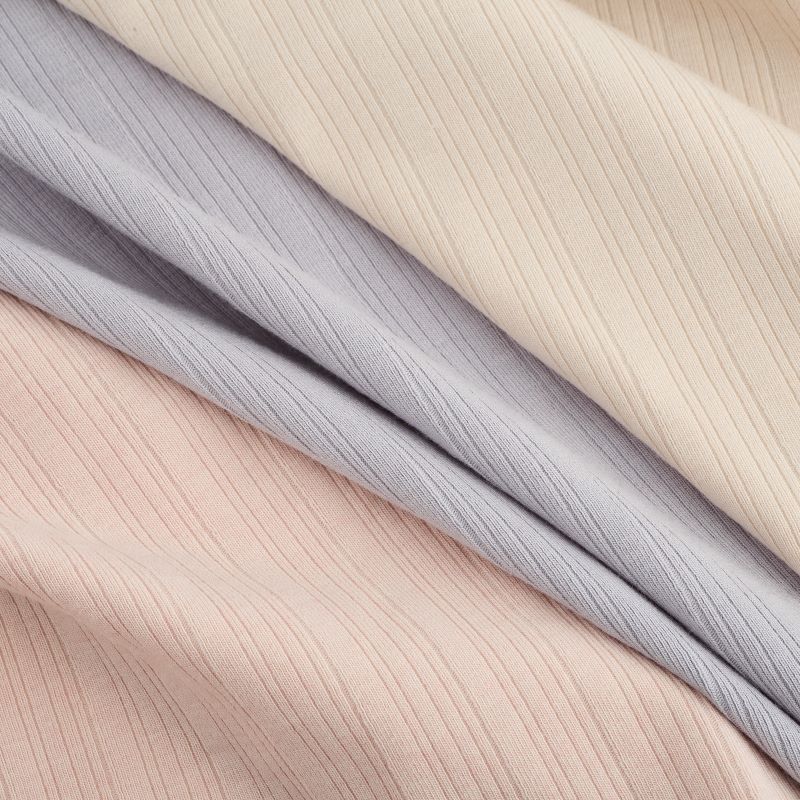
Breathability is where bamboo fiber fabric earns its place in real life, and the difference is structural rather than cosmetic. The fibre structure of bamboo fiber fabric creates micro-pores that let air move and help moisture spread away from the skin, so a garment feels less damp and clingy after a warm commute or an hour of light activity. I have seen this matter most in close-fitting loungewear and sleepwear, where the fabric has to manage moisture without much air movement between layers. It also shows up in adult lounge sets and premium tees, where bamboo fiber fabric drapes softly without the synthetic slickness some performance knits carry. Eastotec’s 180 GSM bamboo-cotton blend is built around that behaviour, combining bamboo with long-staple cotton and a spandex content that gives four-way stretch and shape recovery. The result is a bamboo fiber fabric that feels cool against the skin and moves with the body rather than fighting it. For brands sourcing bamboo fiber fabric for everyday basics, that combination of airflow and softness is what keeps a garment in rotation instead of folded at the back of a drawer.
The Durability Questions That Decide a Bamboo Fiber Fabric Order
Softness gets the attention, but durability is where bamboo fiber fabric orders are won or lost. Buyers often worry that a soft bamboo fiber fabric will pill, sag, or shrink after a few washes, and those worries are not imaginary. Some comparative studies of knitted fabrics have found bamboo knits performing comparably to cotton on pilling and showing good bursting strength, but the outcome depends heavily on loop density, yarn quality, and finishing discipline. Eastotec controls loop density during circular knitting and uses finishing routines that stabilize the bamboo fiber fabric against distortion and skewing. A realistic spec sheet for a bamboo fiber fabric order should include shrinkage targets after standard washing, pilling grade, and colour fastness, not just a softness claim. One sourcing manager for a loungewear brand I worked with moved a line from a standard cotton rib to a bamboo fiber fabric blend because repeat customers kept commenting on the softness and how the garments held up to frequent washing. That kind of feedback is worth more than a brochure. Minimum order quantities at Eastotec are kept flexible enough for a growing label to trial a bamboo fiber fabric quality before committing to a larger production run.
Certifications and Mill Discipline That Make Bamboo Fiber Fabric Auditable
A buyer cannot feel chemical safety through a swatch, which is why certification carries real weight in the bamboo fiber fabric conversation. OEKO-TEX Standard 100 tests the finished article for harmful substances, and that matters for bamboo viscose because the regenerated fibre process involves chemicals that must be fully controlled and rinsed. GOTS certifies organic fibre content and processing conditions, while GRS verifies recycled content where it is used. Eastotec’s bamboo fiber fabric range includes OEKO-TEX, GOTS, and GRS certified options, and the mill operates in-house knitting and dyeing so quality is overseen from yarn to finished roll. For antibacterial claims specifically, a responsible bamboo fiber fabric supplier should point to recognised test methods such as AATCC 100 or ISO 20743 and provide the associated reports. It is also worth noting that OEKO-TEX Standard 100 is a harmful-substances certification, not an antimicrobial performance certification, so antibacterial claims should be supported separately for the relevant product scope. That is not a paperwork formality. It is how a buyer verifies that the bamboo fiber fabric they are ordering matches the claim being made to their own customers. Flexible minimum order quantities also let brands test a certified bamboo fiber fabric before scaling into a full production run, which matters when a collection is being built around a specific hand feel and certification story.
Where Bamboo Fiber Fabric Earns Its Place in a Product Line
The commercial case for bamboo fiber fabric becomes clearer when you look at how people actually use it. It appears in underwear and sleepwear, where skin comfort and frequent washing are practical considerations. It also shows up in lounge sets and relaxed everyday pieces for adults who want softness without synthetics against the skin. It is also moving into premium tees and lightweight everyday tops, where the drape and moisture handling of bamboo fiber fabric give it an edge over standard cotton jersey. A heavier bamboo-spandex quality around 220 GSM offers coverage and structure for leggings, relaxed pants, and light outer layers, while a 180 GSM bamboo-cotton blend suits tees and relaxed loungewear. That range is what makes bamboo fiber fabric commercially useful for a brand: it can carry several product categories without feeling repetitive, as long as weight, blend ratio, and finish are specified honestly. If you are sourcing bamboo fiber fabric for an underwear, loungewear, or everyday basics line and want to discuss weight options, certification requirements, and flexible minimum order quantities, send the Eastotec team a note with your target garment and they can point you toward the right quality before you commit to a bulk order.